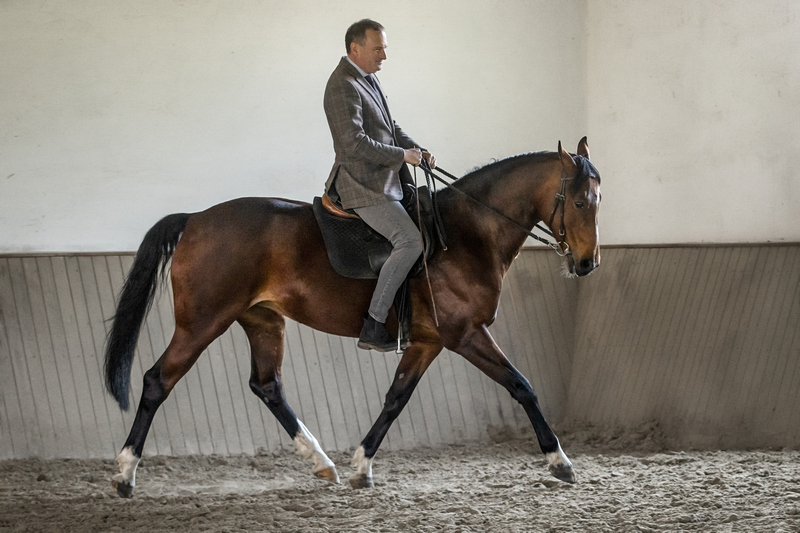
The rein aid is a secondary aid. Its sole purpose is to support the horse in responding to the rider's seat aid (request). Giving a rein aid without a seat aid is forbidden. This statement, however, is not entirely precise, since the seat is always communicating something; the seat aid cannot be “switched off.” Thus, the rider is always giving a seat aid - even if, in the case of an untrained rider, this happens unconsciously. If the seat aid is not applied consciously, it is likely to contradict the rein aid; only when they are aligned will they coincide. Therefore, rein aids can only be given in combination with a deliberate, conscious seat aid.
Ability and Willingness
When the horse responds to the rider’s seat aids as expected, no secondary aids — such as rein aids — are necessary, nor should they be applied. The decisive question is whether a lack of response arises from the horse’s ability or from its willingness to cooperate.
A lack of ability generally indicates that the horse has lost balance and is no longer truly under the rider’s seat. The seat can only act as an effective aid when the rider has the horse under the seat, with horse and rider’s centers of gravity aligned. The rider must be capable of discerning both conditions: when the horse is through and correctly under the seat, and when it has fallen away. If the horse has lost this alignment, the rider must — depending on the direction of imbalance — employ leg and/or rein aids to bring the horse back. The tool for regaining and maintaining this state is the frame.
Secondary aids, including rein aids, are likewise required when the horse shows resistance or lack of willingness. In such cases, the reins serve as the rider’s means of enforcing intention, confirming obedience, and re-establishing the horse’s attentiveness to the primary seat aids.
The Paradox of Secondary Aids
If secondary aids serve solely to reinforce the seat, it logically follows that the specific form of the aid is irrelevant: the signal merely functions as a reminder to the horse—“Pay attention, this is directed at you.” This can in fact be demonstrated in practice.
Tradition, however, prescribes that particular rein aids accompany particular requests, thereby establishing a systematic “language” with the horse—an agreement that certain rein aids signify specific demands. The rationale behind this convention is that it allows any competent rider to communicate with the horse in a consistent manner, including through the use of secondary aids.
Strictly speaking, though, this aligns more with circus training. The distinction between a riding horse and a circus horse lies in the response: the former reacts to the seat, whereas the latter executes predetermined movements in response to external cues. This opens the door to an undesirable tendency in which riders neglect the seat, relying exclusively on rein and leg aids, thereby desensitizing the horse to the rider’s seat.
Rein aids
Rein aids act either on the bit or on the horse’s shoulders, and they can influence the horse laterally or longitudinally.
When the rein acts laterally at the bit, it positions the horse’s head to the side (stelling) and initiates a rotation of the spine at the poll. This is called the positioning rein aid (stelling rein aid). It is applied without any sideways movement of the rider’s hand.
When the rein acts laterally at the shoulders, it can have a direct or an indirect effect: the direct rein aid leads the shoulders towards the same side as the rein and is applied with an opening hand, the indirect rein aid influences the shoulders to the opposite side and is applied by bringing the rein closer to the horse’s mane line.
When the reins are held in one hand, only indirect rein aids can be applied.
When the rein acts longitudinally at the bit, it elevates the horse’s poll and helps to straighten the frame.
When the rein acts longitudinally at the shoulders, it functions as a receiving or half-halting aid, rebalancing the horse.
The most important requirement for longitudinal rein aids is that they must not shorten the horse’s neck. Rein aids must always remain limited and proportionate.
The yielding rein aid is essentially the deactivation of the rein aid, i.e. placing the hand out of action. It represents the neutral, basic position of the rein. Every other rein aid must therefore be concluded with a yielding rein aid.
This release, however, can only be granted once the horse has responded to the seat aid, thereby yielding to the rider’s intention through the seat.
The Most Difficult Rein Aid
The most difficult rein aid is the sustaining rein aid. This rein aid does not seek to change the horse’s speed, direction, or outline. With the sustaining rein aid, the rider asks for the horse’s physical and mental relaxation.
The rider signals the sustaining rein aid by tightening the reins. In fact, the rider tenses their whole body, to which the horse must respond with physical and mental yielding. This rein aid must be complemented by the seat aid and the leg aid that maintains the activity of the hind legs.
The sustaining rein aid should be applied to horses that lean too heavily and resist the rein. On yielding horses, this aid serves to introduce the collecting aid.
The most important point about the rein aid is that it must be released immediately once the horse becomes light in the bit.
Holding the Reins
A rider can only give correct rein aids if they have an independent seat. An independent seat means that the rider does not need to use their hands (cling to the reins) to maintain stability in the saddle (to stay on the horse’s back). It is often difficult to determine whether a seat is truly independent, which is why even “experienced” riders may not have a perfectly independent seat.
Another condition for giving proper rein aids is the rider’s relaxation. With stiff shoulders, stiff elbows, or stiff wrists, it is impossible to give good rein aids. This is why the shoulders must be open, the elbows kept close to the body, the forearms held as if “the rider were holding two glasses of water in their hands,” and the wrists must remain supple and unbroken.
Finally, it is important that the reins are held between the index finger and the thumb, and not gripped with the whole fist or pressed between the ring and little fingers. Holding the reins with the index finger and thumb increases sensitivity in the finger that holds the rein. When handling multiple reins, of course, this must be practiced so the rider can distinguish the feel of the different reins (through different fingers). This is obviously most difficult when four reins are held in one hand.
The correct rein length is the one with which the rider is able to give all rein aids without having to adjust it.
Learning Rein Aids
While body language is understood by both horse and rider from birth, the secondary aids—such as the rein aids—represent a kind of learned language for both parties. Both horse and rider must learn them. Moreover, the rider must practice them to such a degree that, in any given situation, they can apply them almost without conscious thought.
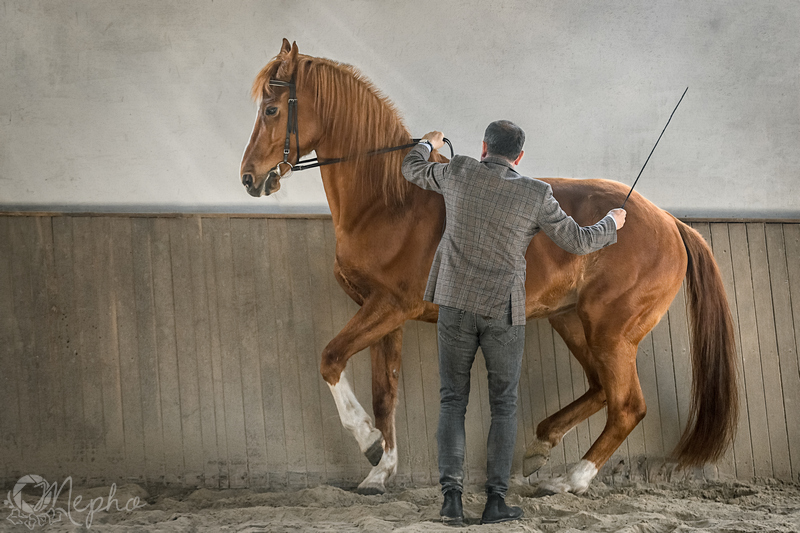
The simplest learning situation for both horse and rider is groundwork. The rider is not only in a simpler position but can also see (rather than only feel, as from the saddle) whether the aid is effective—or not. Advanced mastery of the rein aids is shown when the rider can apply them in-hand in every position, whether on the lunge or in long-rein work.
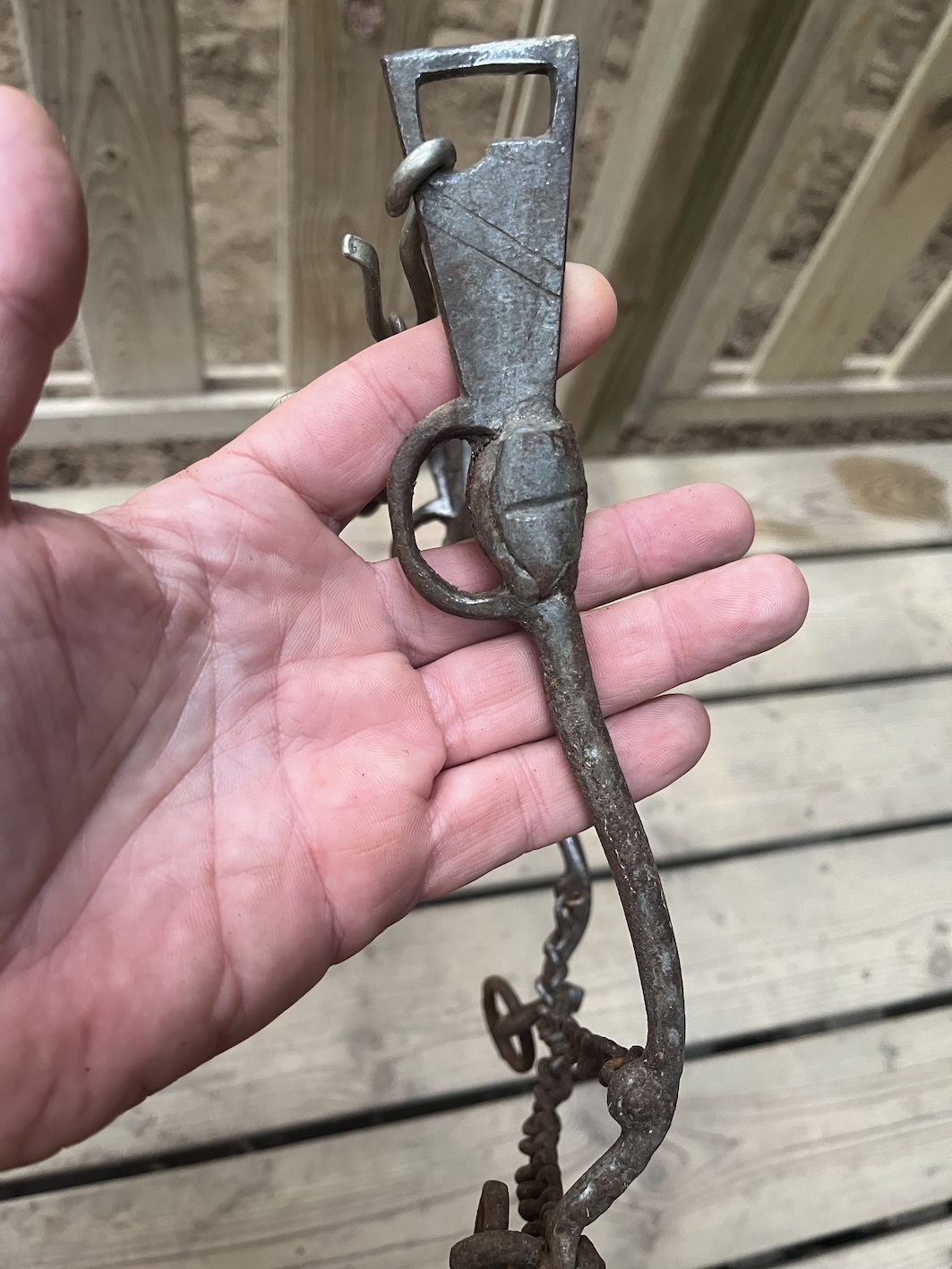 A feszítőzablát hagyományosan kézimunkával készítik. Hogyan is lehetett volna másképpen a gépesítés előtt. :) Így két egyforma zabla nem létezett. Az alábbi gondolatokat Bent Branderup, az Academic Art of Riding nagymestere adta, gondolatait azért rögzítem, hogy az saját lovaskultúránk számára is elérhető legyen:
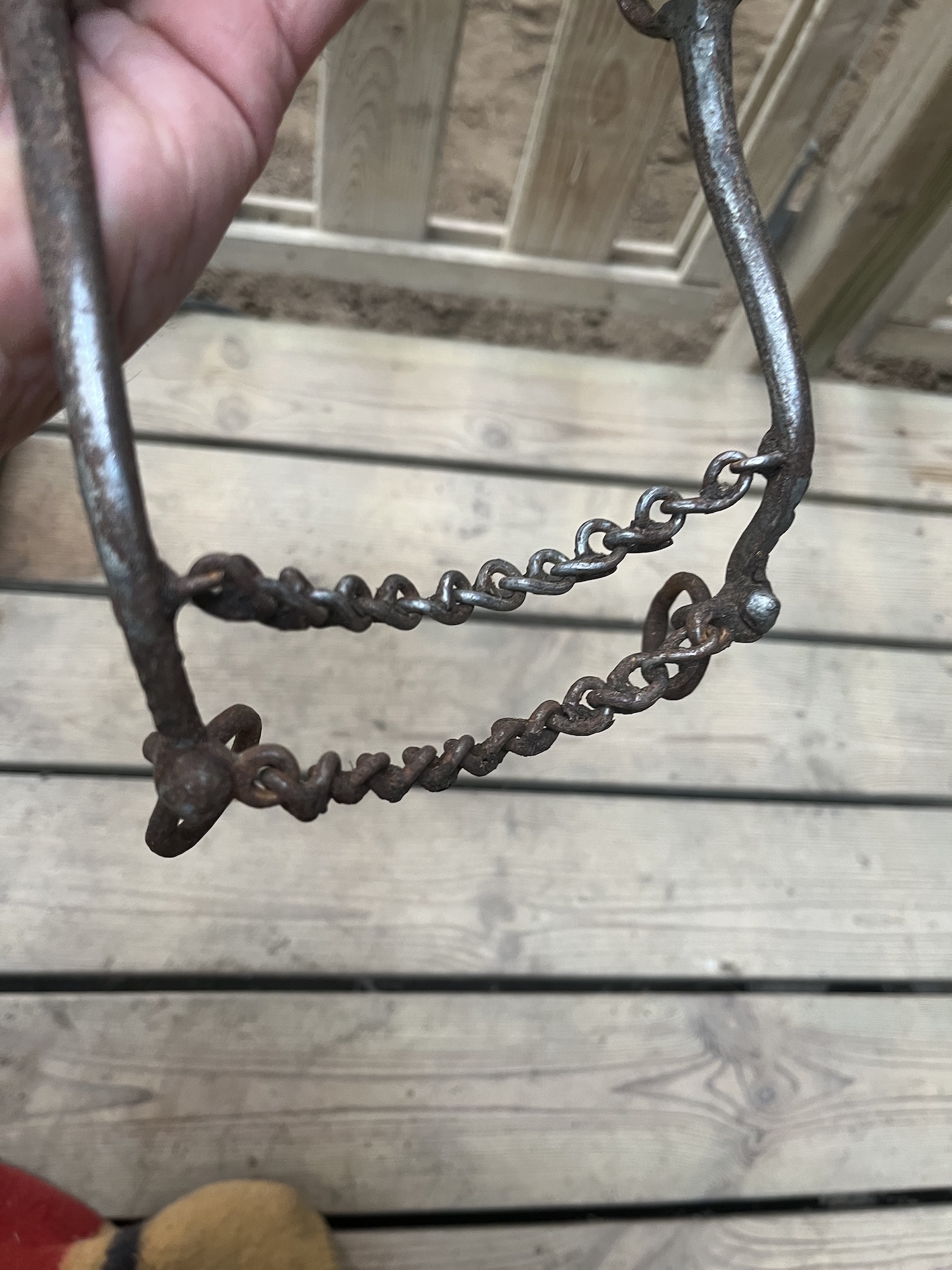 A pálca zabla alatti része - ökölszabály szerint - háromszorosa a zabla feletti rész hosszának. A kissé rövidebb pálcahossz "gyorsítja" a zablát, azaz a zabla a lovas segítségeire hamarabb hatásba kerül, mivel rövidebb elmozdulási utat kell produkálni. A rövidebb zablahosszat így hagyományosan "élesebbnek" mondjuk, a hosszabb pálcahossz lassabb és puhább reakciójával szemben. A reakcióhosszat a lánc rövidítésével is lehet szabályozni, a lánc rövidítésével gyorsabbá lehet tenni a zablát. Ismét alá kell húzni, hogy az élesség nem erősséget jelent - a feszítőzabla nem arra való, hogy nagyobb erővel lehessen a ló szájára hatni.
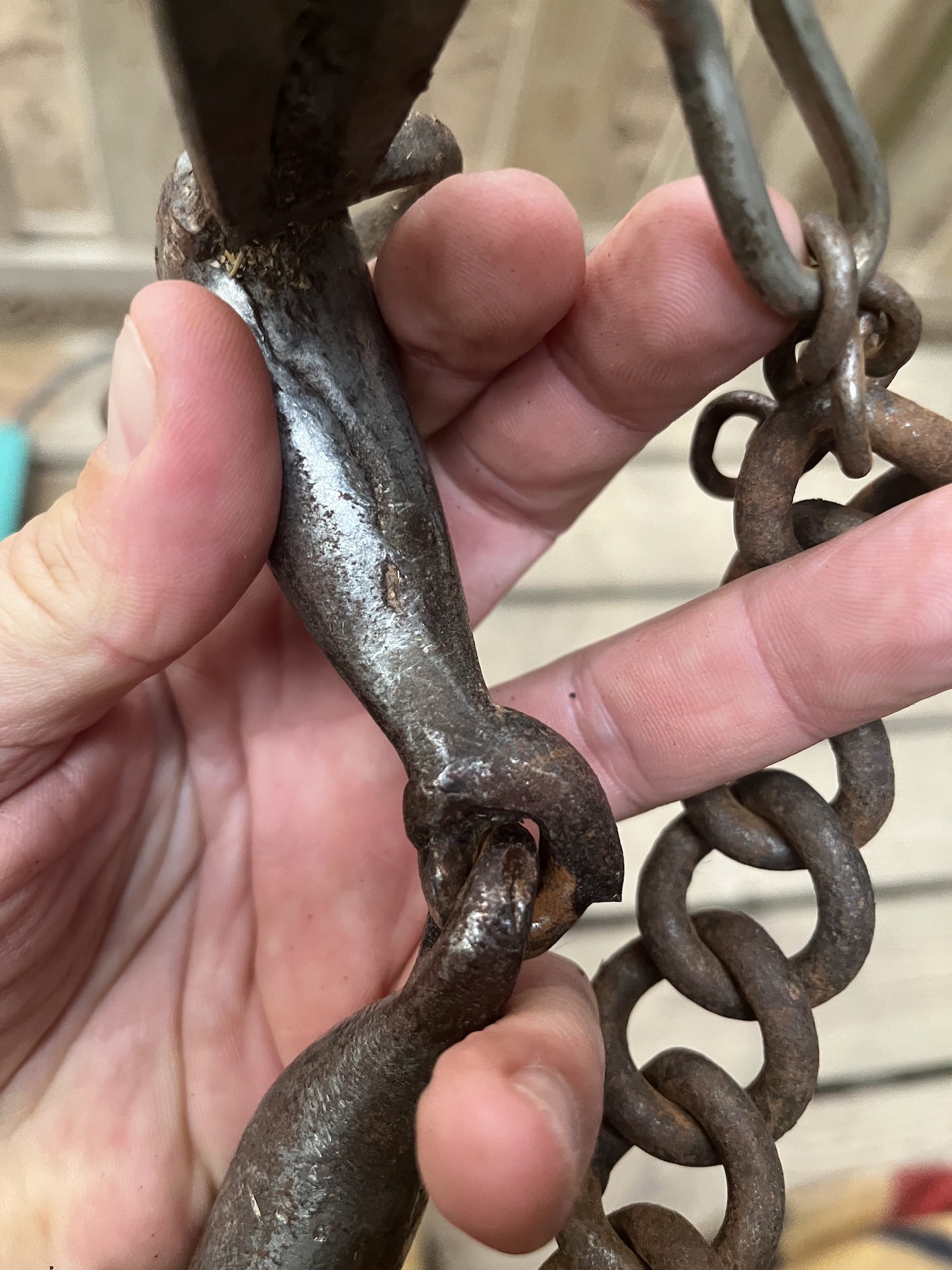 A pálca alsó vége, ahol a szár csatlakozik a zablához, elvileg a felső résszel egy függőlegesbe esik.
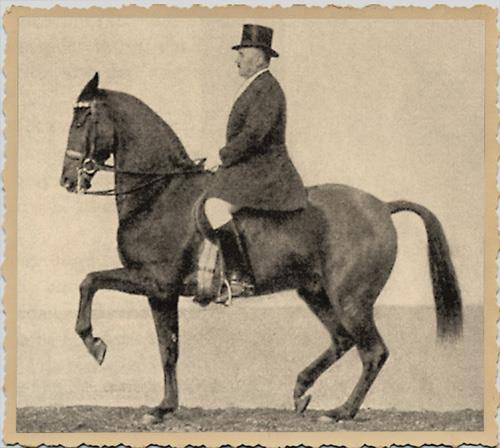 Ennek az eredménye az, hogy látványos párhuzam alakult ki a díjlovasok rollkur stílusa és a westernlovaglás porszívóztató stílusa között. Ezért ha egy western stílusú lovas, vagy egy díjlovas "mélyre lovagolja" lovát, akkor az nem lehet helytelennek nevezni, hiszen ez az elvárás a versenyen. Azonban, ha valaki nem akar igazodni a modern kulturális elvárásokhoz, hanem "csupán" jó társat szeretne nevelni, hátaslovat szeretne képezni, akkor számára nem lehet szempont a versenysport elvárása.
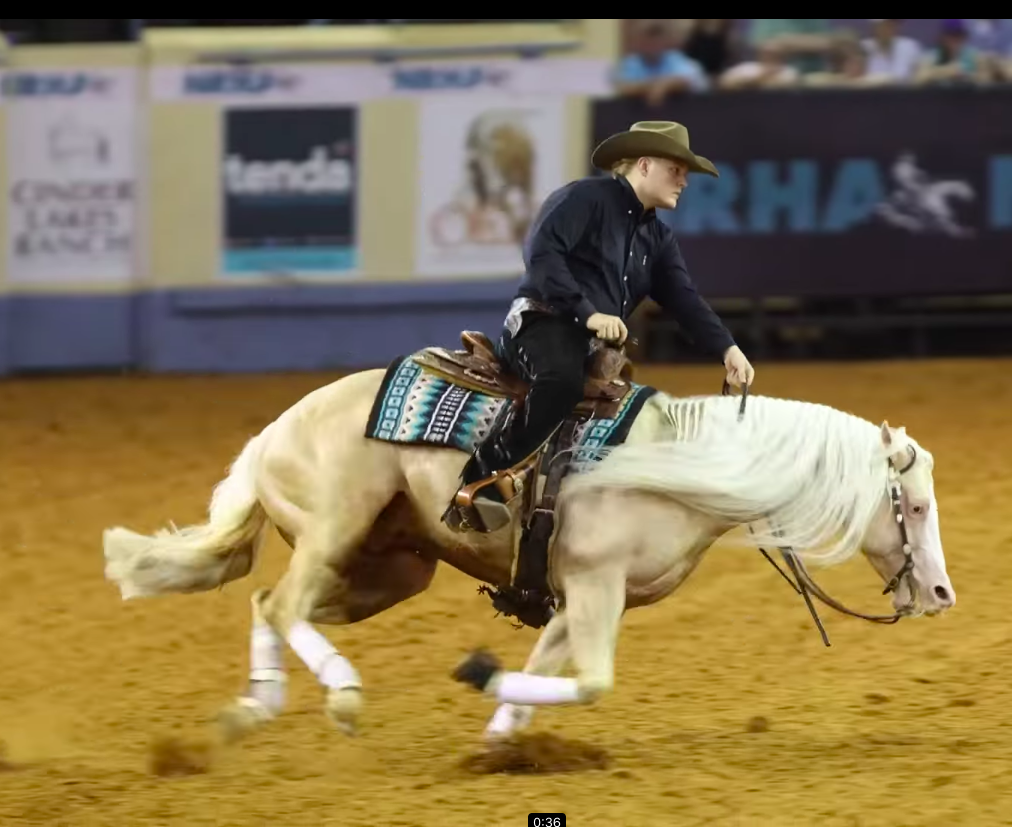 Az állítás fordítottja is igaz. A túlságosan mély nyakhelyzettel valószínűleg (!) a gerincoszlopnak a vállak közé esése jár együtt. Ez kívülről látszik, a ló háta a mar felé lejt. Ha a gerincoszlop a vállak közé esik (a lónak nincs kulcscsontja, így az elülső lábak és a gerincoszlop között nincs ízületes kapcsolat, a gerincoszlopot csak szalagok tartják), akkor elvesztette egyensúlyát, a ló menthetetlenül az elejére esik. A fotón látható ló és lovas akármennyire is ünnepet, akármennyire is "véresre" keresi magát, mégis csak az elején van, azaz lovaglási értelemben nincs egyensúlyban.
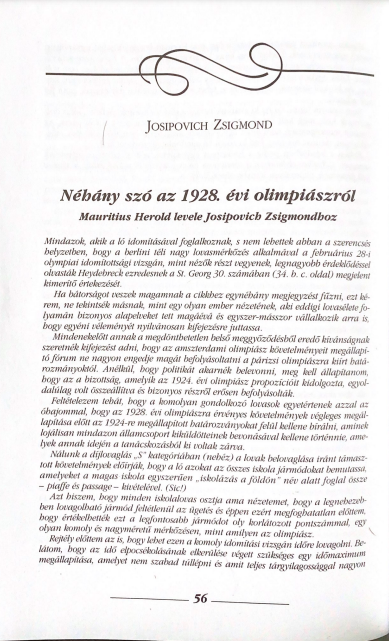 Letter from the Mauritius Herold to Sigesmund Josipovich
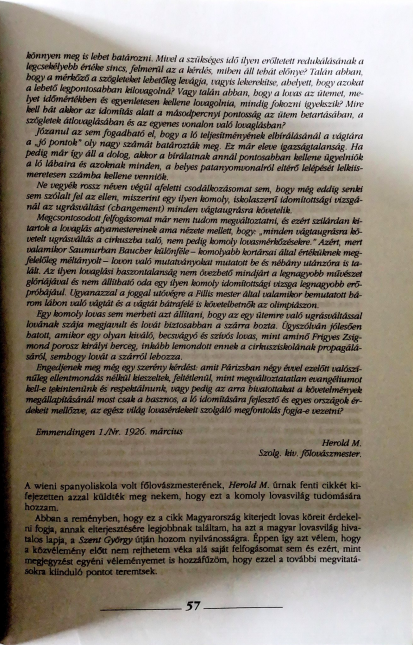 Furthermore I'm surprised that no one has mentioned that flying changes of leg every stride is a requirement for such a serious training test. This is a circus exercise and not for serious competition. It is useless even if Baucher presented it as a kind of stunt in Samur. Such uselessness cannot be surrounded by the greatest artistic halo, it is useless and cannot be part of serious equestrian competitions. If I wouldn't right, then master Fillis' gallop presented on three legs or backward should also have included in the competitions. No serious horseman can claim that the practice of flying changes of leg every stride has improved his horse's mouth, or his horse has been better on the bit as a result of the exercise. I really appreciated the fact that Prince Sigismund of Prussia gave up on promoting this circus school rather than messing up his horse's training.
 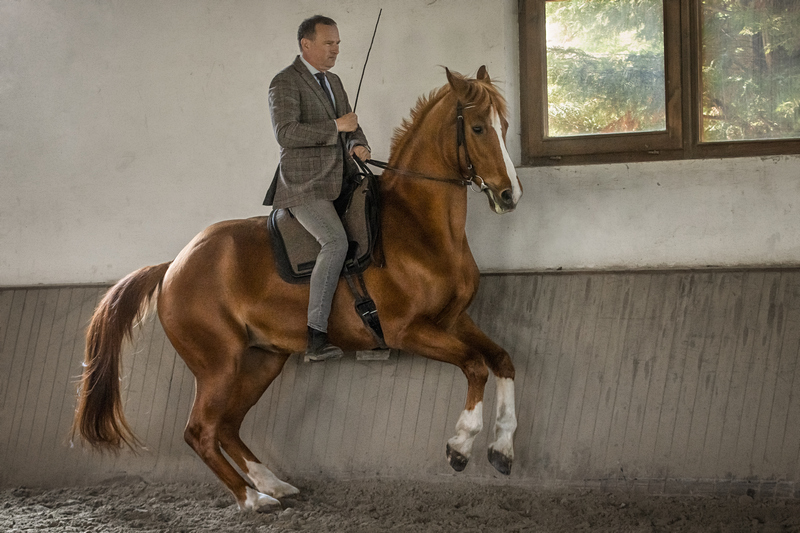 There are many different ideas about what good contact looks like. I see that in my environment riders create contact in different ways, not how I do it.
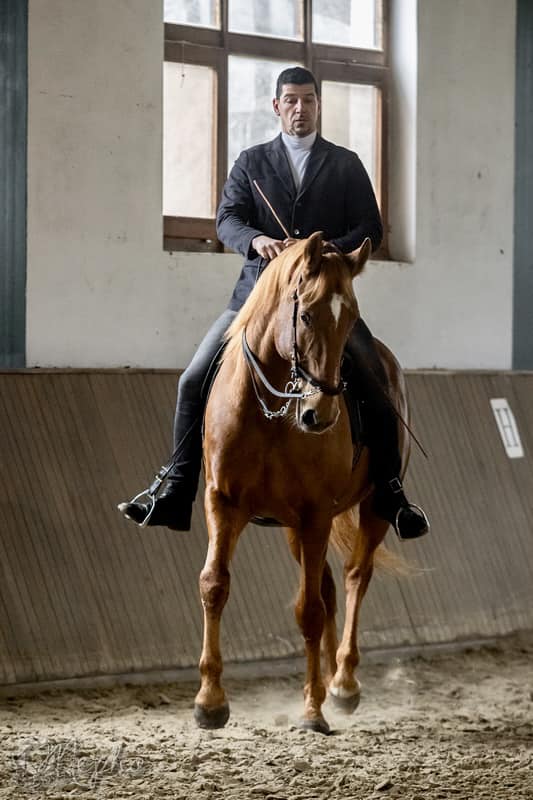 Csík Andor, tanítványom, lovastársam, barátom, sikeresen teljesítette a dán magasiskola, az Academic Art of Riding felvételi tesztjét.
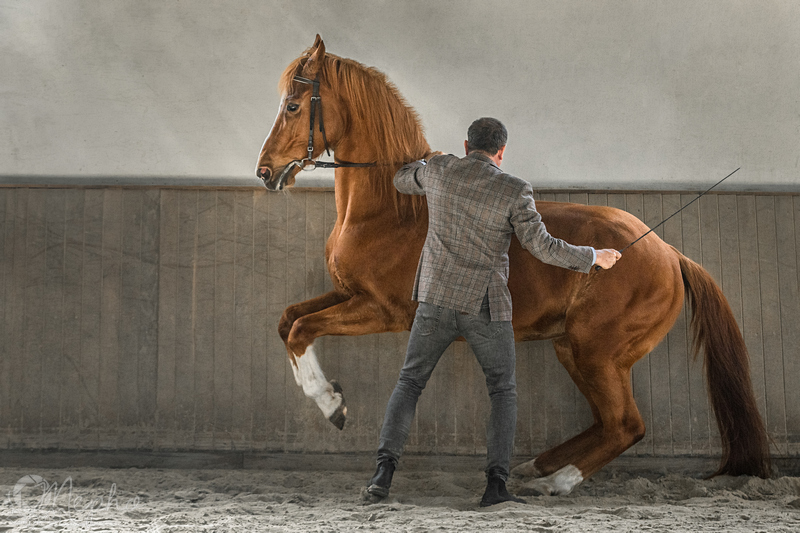 A lot of people don't understand what I do. The epithet "academic" is often heard, which is also a difficult concept for Hungarians to understand. Many people think that I’m the king of ground work, not a man of riding.
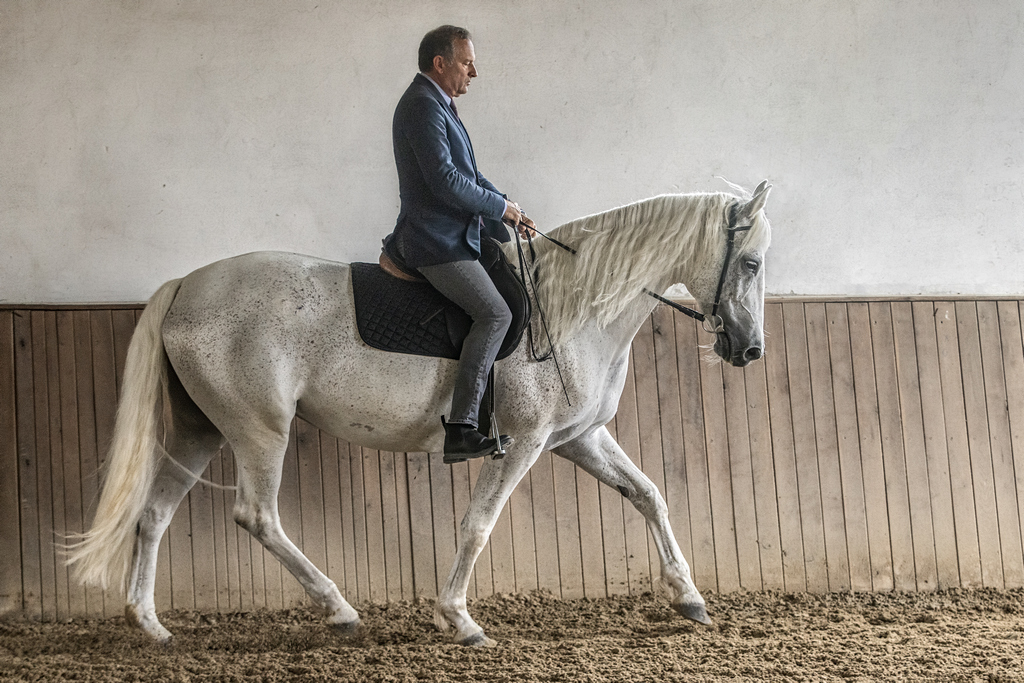 A hátulsó lábak előrelovaglásával a gerincoszlop lengése, a ló lendülete fokozódik. A hátulsó láb előrelendülése a csípőízület meghajlításával arányos. Minél nagyobb a lendület (minél inkább előrelendül a hátulsó láb), a csípőízület annál nagyobb hajlításba kerül.
 A válasz a ló egyensúlyának szabályozásában rejlik. Ha a ló súlypontja előremozdul és közben a hátulsó láb aktivitását a lovas növeli, akkor a tolóerő fog növekedni. Hátravett súlypont esetén viszont a hordozóerő fog növekedni a hátulsó lábak aktivizálása során. Ezért a lendület előfeltétele az egyensúly. Kellő egyensúly nélkül a hátulsó lábak aktivizálása nem lendületességhez, hanem elsietéshez vezet.
 Ha a ló hátulsó lábaiban ébredő erő, a ló testén végighaladva eljut a zabláig és a ló támaszkodást vesz, akkor egyenes. Az egyenesség a lendület előfeltétele, a lendület viszont az egyenességé. Az egyenesség pont azt jelenti, hogy az erő a ló gerincén előről hátrafelé (felvehetőség) és hátulról előre is végighalad a ló gerincoszlopán (támaszkodás vétele). Ha ugyanis a hátulsó lábak aktivitása rossz irányban hat, azaz a ló hátulsó lábaival nem a súlypont felé lép az maga a ferdeség, ha meg nincs aktivitás, azaz nincs erő, ami a ló gerincoszlopán végighaladjon, akkor meg nincs értelme egyenességről beszélni.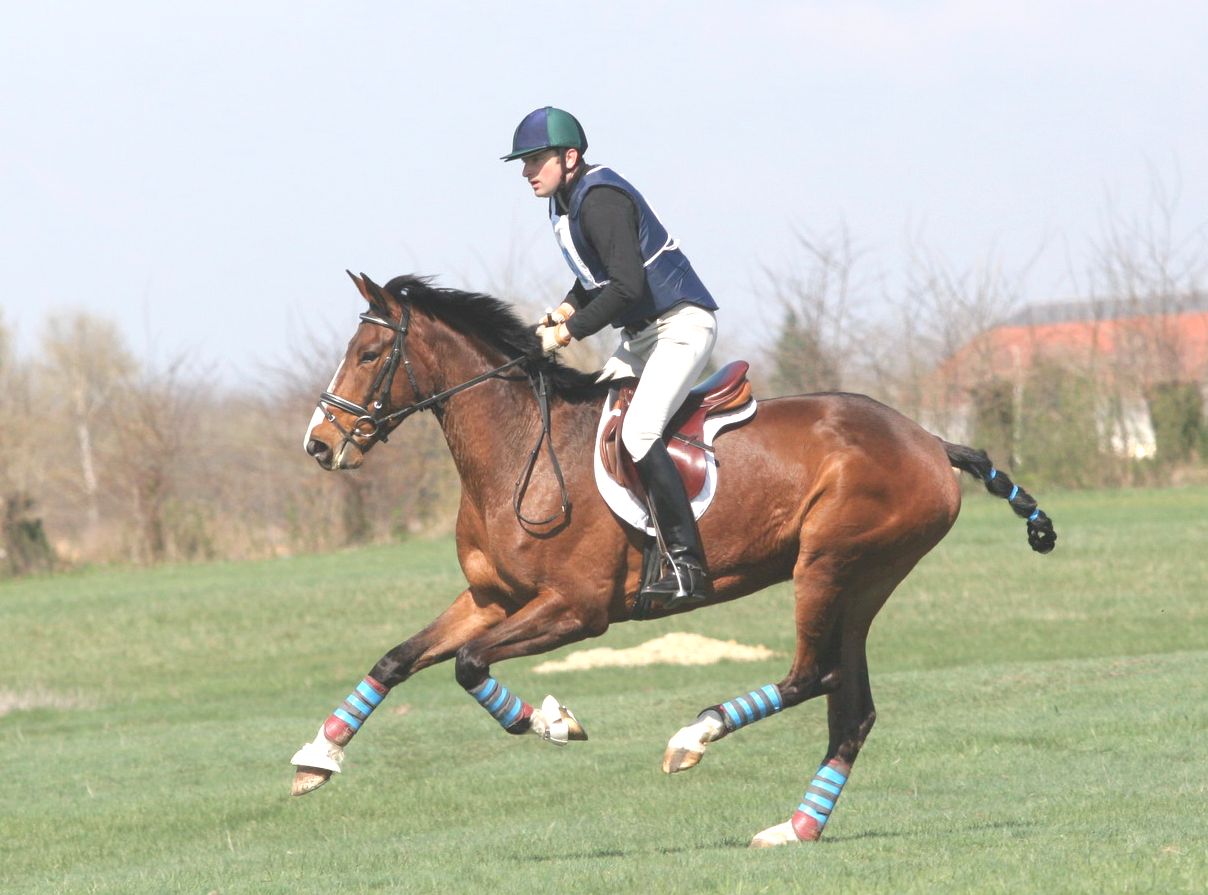
 A descente a lovaglásban kettős értelemmel rendelkezik. Elsődleges értelme az engedés.
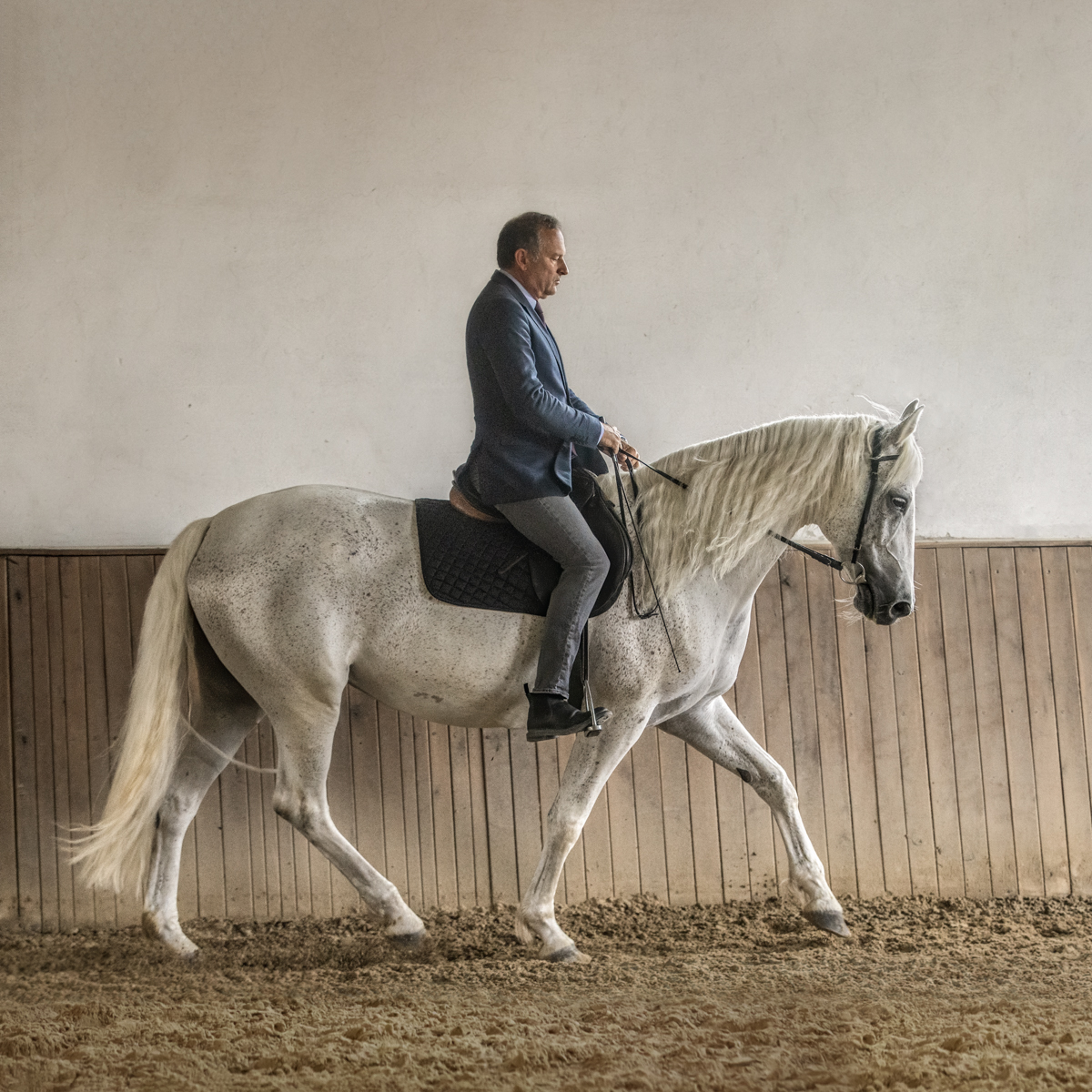 A descente második értelme nem magához az engedés mozzanatához kapcsolódik, hanem a kikapcsolt másodlagos segítségekkel való folyamatos lovaglást jelenti. Ez a szárak és csizmák nélküli lovaglás, ez az úgynevezett descent de maines, descente de jambes lovaglás. Ez a magasan művel lovas jelképe évezredek óta. Az ilyen lovaglás persze nem jelenti azt, hogy sohasem alkalmaz a lovas másodlagos segítségeket, a szár, vagy a csizma sohasem kerül hatásba, hanem azt jelenti, hogy ritkán, csak időről időre jelzik azok a lónak azt, hogy figyeljen az ülés segítségeire és fogadja el azokat.
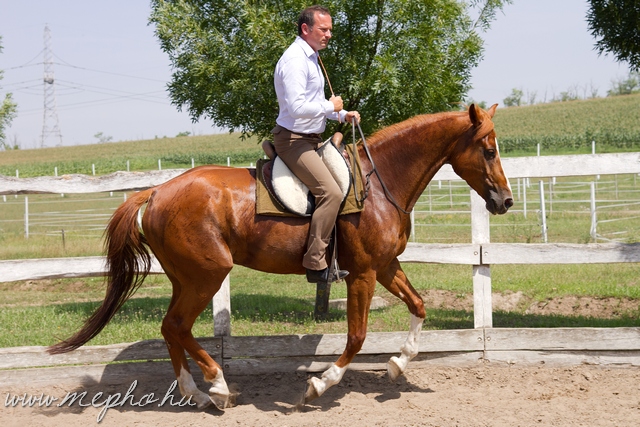 Előre bocsátom, hogy a kérdésre nem lehet fekete-fehér választ adni, hiszen igen különbözőek a motivációk és a célok, így a lókiképzés módszerei, technikái is azok. Ezért, ami az egyik esetben jó és támogatandónak tartható, az a másikban nem biztos, hogy az.
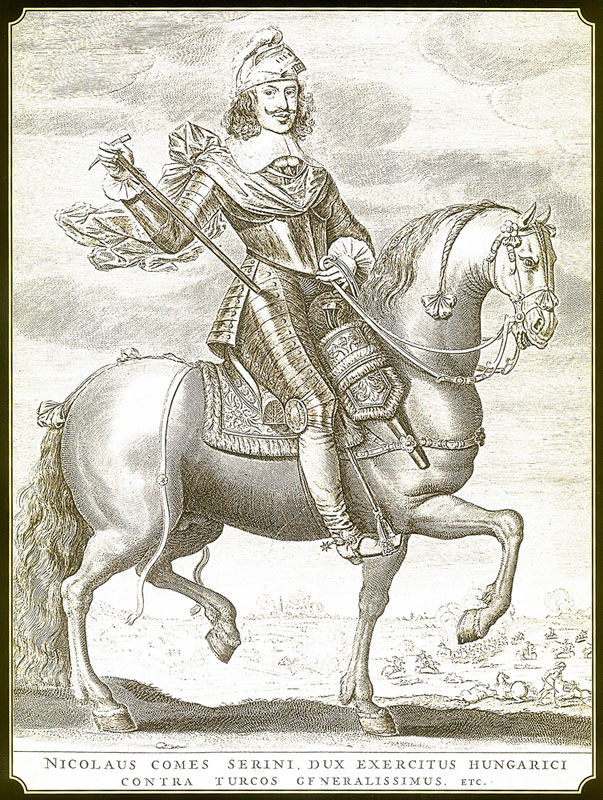
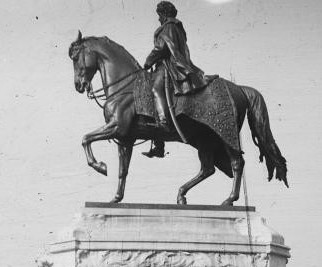 Annak idején, amikor a Kossuth téren álló Andrássy szobor újraalkotása zajlott, a szobor szinte félelmetes méretű gipsz mintájának elkészülte után lehetőségem nyíltt annak megtekintésére dr. Hecker Walter és Prutkay Zoltán társaságában. Aki lovasemberként először látja a szobrot, persze meglepődik a ló különös mozdulata kapcsán. Miféle jármódban ábrázolta Andrássyt a századforduló kiemelkedő szobrásza, Zala György? Vajon valóságos a mozdulat, vagy elhibázott, esetleg csak egy olyan művészi alkotással állunk szemben, ami a szobrász vízióját fejezi ki?
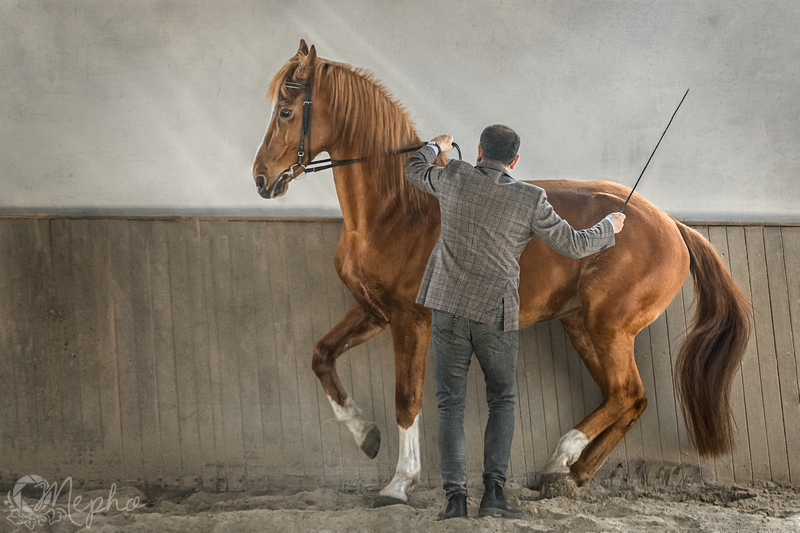 Lovat találni persze nem egyszerű, hiszen az egyrészről szerelem, másrészről szerencse kérdése. Végül az egyik legkiválóbb lovas szakember, Szikszai Lajos barátom ajánlott egy lovat: ő ismerte szándékom és azzal keresett meg, hogy ismer egy eladó kancát Tolna megyében, ami szintén Ginus – Justboy, csak egy évvel idősebb Aranydiónál. Mint végül kiderült, a lovat a szintén kiváló Kapoly István lovagolta Simontornyán és amikor elindultam lónézőbe különös érzés fogott el. A helyzet megértéséhez tudni kell, hogy Sáripusztán az egyes évjáratokat ugyanazzal a kezdőbetűvel nevezik el és, ha a 2004-es évjárat A betűs volt, akkor az előző évjáratnak Z betűsnek kellett lennie. A történethez tartozik, hogy ikerlányaim egyikét Zitának hívják. Szóval a különös érzés a kezdetektől velem volt és amikor megérkeztem Kapoly Pistához és az istállóból előhozott egy gyönyörű kancát, az első kérdésem az volt, hogy mi a ló neve. A válasz Zita volt. A ló első látásra tetszett, szépsége mindmáig töretlen, de pont a neve miatt csak hümmögtem, mert a választásnál a sorsszerűségnek is akartam teret adni: hazaérve megkérdeztem Zita lányomat, hogy mit szólna hozzá, ha az új lovat Zitának hívnák (azt válaszolta, hogy részéről nem probléma), ezek után pedig hozzávetőleg két hónapig nem is foglalkoztam lóvétellel csak vártam, hogy mi történik a lóval, vajon mit tartalmaz a sors könyvében megírt, rá vonatkozó szakasz. Majd felhívtam Kapolyt, hogy meg van-e még a ló, arra vár-e Zita, hogy megvegyem. Hát várt, és így Zita 2008 kora nyarán megérkezett hozzám.